



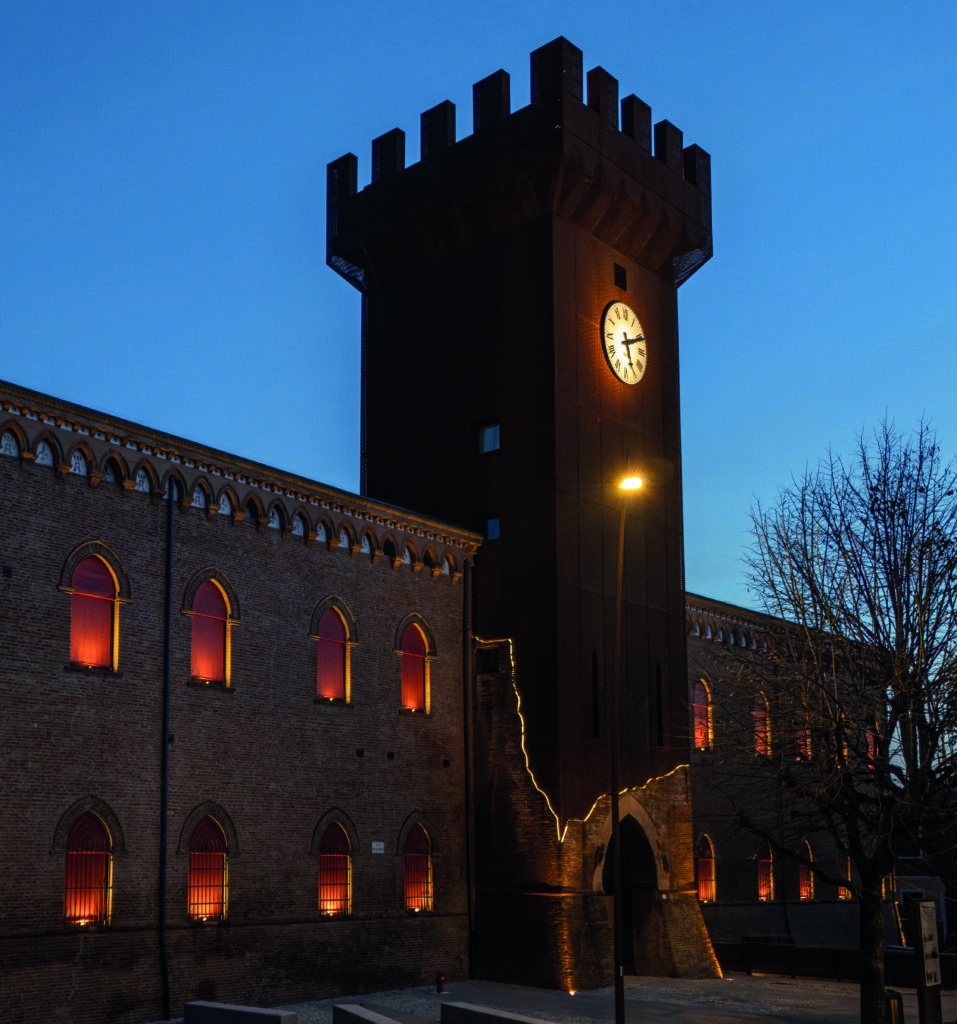
Resstende has designed and installed over 130 solar shading systems, harmonizing historical aesthetics and modern technology to enhance energy efficiency and comfort at Castello Lambertini in Poggio Renatico, Ferrara. This landmark, 12 years after the 2012 earthquake, once again serves as a vital point of reference for the community.
The project, led by Senior Project Manager Angelo Furia in collaboration with architect Gian Paolo Rubin and engineer Samantha Gessi, Head of the Territorial Management Area, required special attention to integrate modern technical solutions within the historical context of the building.
“The choice of Resstende,” commented architect Gian Paolo Rubin, “was guided by the company’s ability to combine technology, durable materials, and aesthetics that align with the historicity of the Castle. Their attention to detail and tailoring for specific projects like this enabled the integration of contemporary solar shading systems that respect tradition while meeting sustainability and low-maintenance demands required by the administration.”
The original solar shading systems—traditional “Ferrarese-style” Roman blinds—were reinterpreted using advanced technologies and innovative materials. The installed shading systems not only enhance the building’s aesthetic but also contribute to improving energy efficiency. Models such as L1 504, L1 505, L1 511, and L1 512, equipped with C91 and C104 aluminum cassettes painted in RAL 3016 amaranth red, were combined with fabric Soltis 92 Perform in brick red shade (code 38180). This fireproof fabric with a 4% openness factor integrates seamlessly with the structure, ensuring a technological, durable, and weather-resistant solution with excellent energy performance, reducing both visual impact and maintenance costs.
“In redesigning the solar shading for Castello Lambertini, we adhered to a key principle: preserving a dialogue with tradition while reinterpreting it through contemporary technologies,” stated Senior Project Manager Angelo Furia. “Every element was custom-made to blend perfectly with the historical architecture, maintaining a visual connection to the past while offering advanced and durable technical solutions. The final result fully meets aesthetic and functional expectations, delivering high performance with minimal maintenance.”
The restoration of Castello Lambertini stands as a virtuous example of how Resstende’s technology can support the recovery of historical heritage, making it more accessible and sustainable for future generations.